September 23, 2026
Upgrading your kitchen or bathroom is an exciting project for any family. The surfaces you select play a major role in the functionality and aesthetic of your living space. When selecting building materials, many people find themselves overwhelmed by the options available. It's easy to get confused when comparing different stones, especially when their names sound so similar. You want a material that fits your lifestyle, complements your home, and lasts a long time.
Two of the most popular choices for modern home renovations are quartz and quartzite. Because their names share the same root word, shoppers often assume they are closely related variations of the same product. In reality, these two surfaces have distinct origins, unique characteristics, and different maintenance requirements. Understanding how they differ is a crucial step in the planning phase. We'll break down the fundamental differences so you can choose the right option for your needs.
Composition and Manufacturing Processes
The most profound difference between these materials lies in how they are created. Quartzite is a naturally occurring metamorphic rock that forms over time under intense heat and pressure. It begins as sandstone and gradually evolves into a dense stone through geological processes. Because it's natural, miners extract it directly from the earth in large blocks before cutting slabs.
Quartz is an engineered product. While it contains natural quartz crystals, manufacturers blend these minerals with polymer resins and pigments to create a solid surface. The typical ratio involves mostly natural stone elements bound together by the resin.
This manufacturing process allows fabricators to control the final outcome of the slab. Human intervention means the engineered surfaces are produced in a factory rather than quarried. These differing origins impact everything from the appearance to the daily performance of the materials.
Natural stones bring an element of the outdoors inside, carrying the unique geological history of their formation. Engineered stones offer consistency that natural rocks can't provide. Knowing whether you prefer a natural or crafted surface is the first step.
Aesthetic Appeal and Color Variations
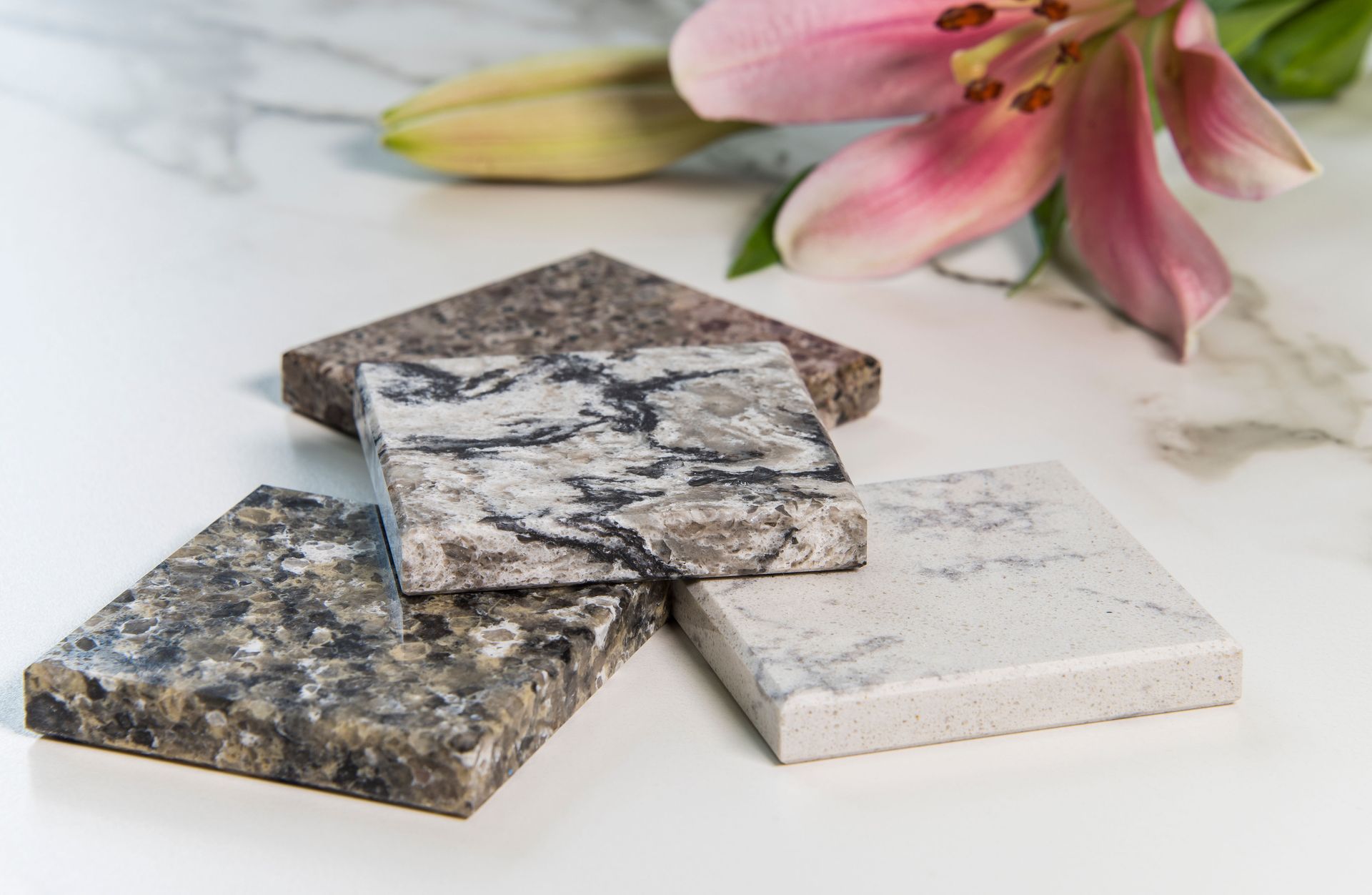
When evaluating visual aspects, homeowners quickly notice the distinct beauty of each option. The natural origin of quartzite countertops means that no two slabs are ever identical. You'll find unique veining patterns, organic movements, and subtle mineral deposits. The color palette usually features earthy tones like white, gray, and beige, though some slabs feature faint hints of blue or green.
Because quartz is engineered, its visual possibilities are nearly endless. Manufacturers can add various pigments to the resin mix to produce slabs in a wide spectrum of striking colors. You can find solid white, deep black, or vibrant blue surfaces that stand out in any room. If you want a specific color to match your kitchen cabinets or a uniform pattern without unpredictable veins, this engineered surface provides creative control over the final design.
Seam visibility is another aesthetic factor to consider. With natural slabs, matching the complex veining across two distinct pieces is a challenge. Installers work hard to blend the seams, but the organic patterns sometimes make transitions noticeable. Engineered slabs offer consistent patterns throughout the entire surface, making it easier to hide seams and create a cohesive look.
Ultimately, your design preference dictates the right path. Some homeowners love the sweeping lines of natural rock, viewing their island as functional art. Others prefer a clean, uniform look that ties the room together seamlessly. Both materials provide stunning finishes, but they cater to very different design philosophies.
Durability and Heat Resistance Matter
Both materials offer great durability for busy households, but they handle wear and tear in different ways. Natural quartzite is one of the hardest minerals on the planet, making it resistant to scratches. You can comfortably prepare meals on its surface. However, the natural veining can occasionally create weak points where heavy impacts cause chipping.
Engineered quartz is also durable, but the added resins give it a slight amount of flexibility. This makes it resistant to cracking under the heavy impact of cast iron pots. However, those same resins make the surface vulnerable to extreme heat. According to This Old House, quartz counters can tolerate temperatures up to 400 degrees Fahrenheit. Placing a hot baking sheet directly on the surface might melt the resins or leave a permanent scorch mark.
On the opposite end of the spectrum, the geological formation of quartzite countertops gives them natural heat resistance. They formed under intense subterranean heat, so a hot pan from your stove will not damage the surface. Even with this robust heat tolerance, using a trivet is a smart habit. Establishing good habits ensures your investment remains pristine for years.
Both surfaces are tough enough to handle the daily activities of a bustling kitchen. Whether you have young children crafting on the island or you host dinner parties, these materials hold up well. One requires caution with hot items, while the other demands care around heavy impacts near the edges.
Maintenance and Long-Term Care Needs
The daily maintenance routines for these two surfaces highlight another significant distinction. Natural stones are porous, meaning they contain microscopic holes that can absorb liquids over time. To prevent stains from spilled wine or coffee, quartzite countertops require an initial seal upon installation. Homeowners must reapply this protective sealant regularly. Neglecting this maintenance step can lead to permanent discoloration from dark liquids.
The engineered nature of quartz eliminates the need for sealing. The resins fill in all the microscopic gaps between the mineral crystals, creating a nonporous surface. Liquids can't penetrate the slab, making it resistant to staining without extra steps. You'll never have to worry about buying expensive sealants or tracking a maintenance schedule. A wipe with a damp cloth and mild soap keeps the area clean and fresh.
While the engineered option offers a more hands-off approach to daily maintenance, natural stone enthusiasts feel the extra care is a small price to pay. Applying a sealer is a straightforward process that takes a short amount of time once or twice a year. If you're diligent about maintaining the seal, quartzite countertops will look beautiful indefinitely.
For cleaning, both surfaces benefit from gentle, nonabrasive cleaners. Harsh chemicals can dull the polish on natural stones and degrade the resins in engineered slabs. Warm water and a soft sponge handle most daily messes perfectly. By sticking to gentle cleaning methods, you protect the structural integrity of whichever material you choose.
Choosing the right surface comes down to evaluating your daily habits, design preferences, and willingness to perform maintenance. If you prioritize uniform patterns and a surface that never needs sealing, engineered quartz is an excellent fit. Conversely, if you want organic beauty and superior heat resistance, quartzite countertops will likely capture your heart. Both materials elevate the look of a kitchen.
Tackling a kitchen or bathroom renovation requires careful thought and planning. Now that you understand the distinct qualities of these two popular materials, you can move forward with confidence. Consider your household routines, weigh the pros and cons of each option, and envision how the slabs will look in your space. Armed with the right knowledge, you're ready to select a stunning surface.
If you're ready to upgrade your kitchen or bathroom, contact Stoneworx today to browse our selection of quartzite countertops.